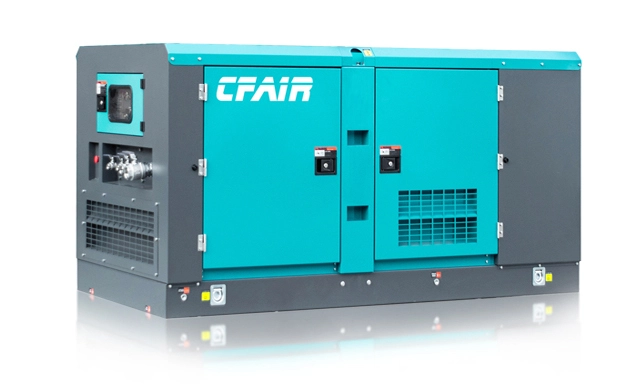
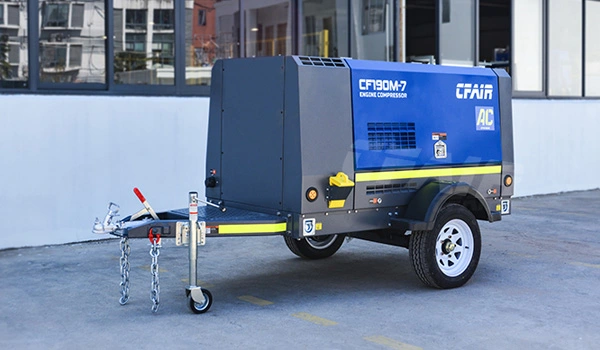
In industrial sites, mining, infrastructure construction and field operations, diesel screw air compressors have excellent independence and adaptability because they do not rely on electricity, making them an ideal compressed air power source. But many users often overlook a key maintenance action-draining.
When customers ask: "My air compressor has not been drained for two months. Will it have an impact?" Our answer is not only "there is an impact", but "a big impact". This article will discuss in depth the principle of water generation, the consequences of untimely drainage, the standardized drainage process, and the important role of drainage in the diesel screw air compressor system to protect the operation and life of your equipment.

During the air compression process, the air volume is greatly reduced and the temperature rises rapidly. When the high-temperature compressed air enters a relatively low-temperature environment (such as a gas storage tank or post-processing equipment), the water vapor in it begins to condense and turn into liquid water, forming the so-called "condensed water".
When the diesel screw compressor is running, it usually inhales a large amount of external natural air. This air inevitably contains moisture, especially in the following environments, the moisture content is higher:
Wet season: such as the plum rain season or the rainy season in the south;
High humidity areas: such as coastal areas or tropical climates;
Winter: the outside temperature is low, the air flow cools faster, and it is easier to condense water.
The air storage tank is not only a component for storing and regulating the pressure of compressed air, but also the first barrier for water precipitation in air compressor systems. When the compressed air passes through the air storage tank, the gas changes speed inside the tank and hits the wall, accompanied by rapid heat release, so that the water vapor quickly liquefies into condensed water and deposits at the bottom.
Once the compressed air contains water, it will lead to:
Defects in processes such as sandblasting and spraying that require high gas cleanliness;
Rust and stagnation inside the pneumatic tool, affecting the accuracy;
Pneumatic control system malfunctions, reducing automation stability.
Corrosion of internal parts: such as the oil-gas separator housing, the inner wall of the gas tank, the cooler, etc.;
Lubricating oil emulsification and deterioration: water entering the lubrication system will emulsify the lubricating oil, reduce the lubrication performance, and cause wear of bearings, rotors and other parts;
Oil-gas separation efficiency decreases: the pressure difference of the oil-gas separator increases due to increased humidity, resulting in reduced separation efficiency and increased burden on the machine;
Solenoid valve or pressure sensor malfunction: Although diesel compressors are mainly controlled mechanically, some intelligent control systems still rely on electronic components and are easily ineffective due to water vapor interference.
Daily drainage-a must-do every day
The CFAIR team recommends that drainage operations must be performed before using the air compressor every day. This action should form a habit and standardize the process:
Turn off the air compressor before opening the drain valve;
Slowly open the drain valve at the bottom of the gas tank to drain the water;
The color and smell of the liquid can be observed. If abnormalities are found (such as blackening or stinking), the lubricating oil status must be checked immediately;
Close the valve after draining the condensed water to prevent secondary air intake.
For example, in the rainy season in the south or at the seaside, the moisture content is extremely high and the amount of condensed water is large. The daily drainage frequency should be increased to 2 times, and an additional cold dryer should be used to reduce the gas dew point.
Low temperature will cause condensed water to freeze inside the system or in the drainage pipeline, which may block the drain valve, and even freeze and crack the components in severe cases.
Drainage must be performed after the machine is used to avoid water freezing (pay attention to safe operation to avoid burns);
Add heating belt or use antifreeze oil.
Compared with electric air compressors, diesel screw air compressors often have more stringent operating environments:
There are more field operations, and the dust and humidity are more complex;
The cooling fluctuates frequently and is more prone to condensation;
There is no external power supply, and some cooling and post-processing rely on mechanical methods, and the precipitation efficiency is relatively limited;
The life of the lubricating oil depends more on the system sealing and moisture control.
Therefore, the drainage management of diesel air compressors is the "lifeline" to ensure the reliability and life of the system.
A construction customer reported that the operating efficiency of the diesel air compressor he used dropped significantly. Inspection found that there was serious water accumulation at the bottom of the gas tank, resulting in:
The pressure difference of the oil-gas separator soared;
The pneumatic breaker was weak;
The exhaust contained water and oil, resulting in the failure of the spraying operation;
The internal cooler of the air compressor was rusted, and the equipment needed to be returned to the factory for repair.
The fault was attributed only to the failure to drain water for 3 weeks.
Air Compressor Daily Inspection Checklist | Daily |
Check Compressor Oil Level | ◇ |
Drain Through Oil Chamber Drain | ◇ |
Check Oil-water Separator | ◇ |
The drainage of diesel screw air compressors may seem simple, but the operating mechanism and safety assurance behind it are very complex. Ignoring drainage not only affects air quality, but also directly harms equipment life, work efficiency and customer production plans.
As an air compressor service engineer said: "One minute of drainage a day is better than three hours of maintenance."
CFAIR recommends that you include drainage in the operating procedures and implement them in a standardized manner, so as to truly achieve: "Maintaining equipment is like maintaining a car, and using equipment is like using people" - only by taking good care of it can you achieve stable output.
CFAIR recommends some popular products on the market based on customers' actual applications and offers customization services according to specific customer requirements. Simultaneously, CFAIR is committed to customizing machinery based on customers' specific needs. Whether customers require solutions tailored to special environments, specific flow rates, or customized pressure requirements, CFAIR provides personalized customization services, ensuring that products perfectly meet the practical engineering and application needs of customers. Through flexible customization options, CFAIR offers customers a broader range of choices to meet the requirements of different industries and application fields.
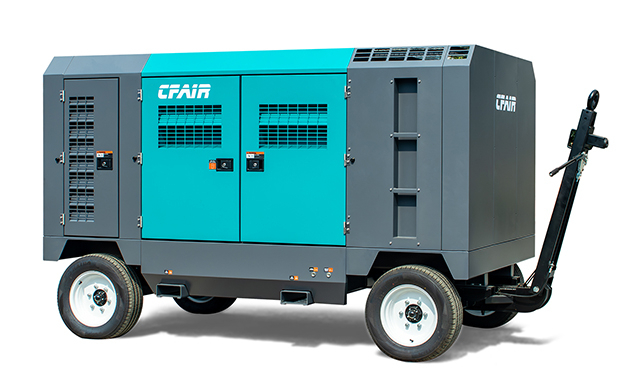
550cfm 15.5m³/min 275.5psi 19bar
Engine Brand CUMMINS
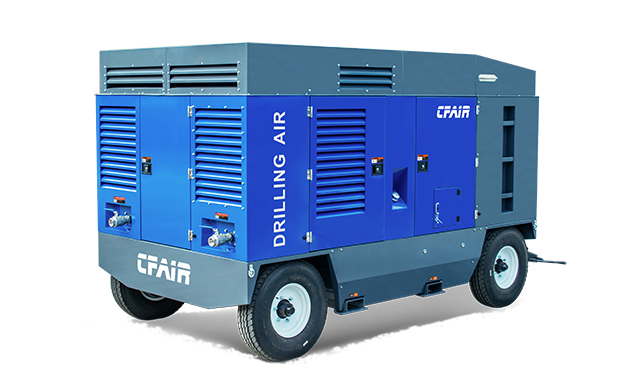
1600cfm 45m³/min 246.5psi
10.5bar Engine Brand CUMMINS
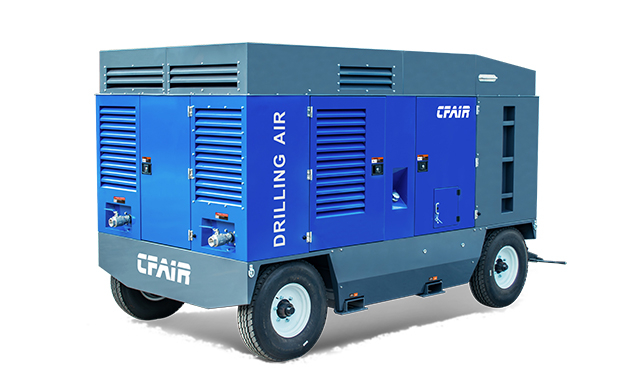
1300cfm 36.6m³/min 449.5psi
31bar Engine Brand CUMMINS